


Yekemem Shai Spiced Custard Tart with Fresh Fruit
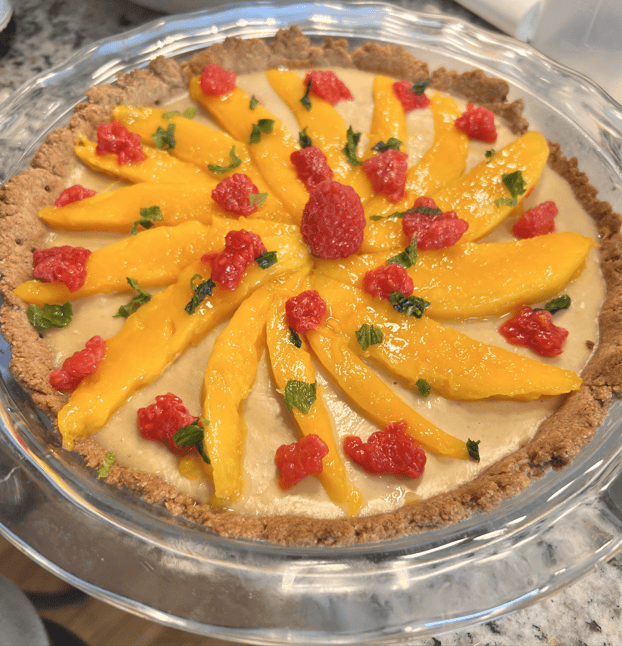
There are some recipes that are more than dessert. They carry a story.
This tart takes inspiration from yekemem shai (shai qemam/kimem), an Ethiopian style of spiced tea, and brings those warm, aromatic flavors into a creamy custard tart topped with fresh mango, raspberries, and mint.1
A Little History Behind the Shai
Ethiopia may be famous for coffee, but tea has its own place at the table. Shai refers to tea, while qemam/kimem refers to spices or seasoning.1 Yekemem shai combines tea with aromatic spices such as cinnamon, cardamom, cloves, and sometimes ginger.1
One particularly special ingredient is korarima, sometimes called Ethiopian cardamom.1 Native to Ethiopia, korarima has a long culinary history and is used in spice blends, breads, coffee, and other traditional preparations.1
Korarima also contains naturally occurring plant compounds with antioxidant activity, adding another layer of interest to this culturally important Ethiopian spice.2
For this recipe, I wanted those flavors to leave the teacup and become dessert.
This tart was inspired by Nisha Vora’s chai-spiced custard tart from her cookbook, Big Vegan Flavor.2 Nisha, creator of Rainbow Plant Life, is known for building bold, layered flavors into plant-based recipes, and her tart provided the inspiration for this version.3
For Nourishing the Culture™, I took the recipe in a different direction by centering the flavors of Ethiopian yekemem shai. I also adapted it to be non-vegan, using butter and eggs and incorporating coconut flour into the crust.
The result is a creamy, warmly spiced tart that brings a different cultural story to the table.
Yekemem Shai Spiced Custard Tart
Makes: One 9-inch tart | Serves: 8
Yekemem Shai Spice Blend
- 1 teaspoon ground cinnamon
- ½ teaspoon ground ginger
- ½ teaspoon ground cardamom, preferably korarima
- ¼ teaspoon ground cloves
- Pinch of allspice, optional
Combine all spices and set aside.
Coconut Flour Crust
- ¾ cup coconut flour
- ¼ cup oat flour
- ½ teaspoon sea salt
- 1½ teaspoons yekemem shai spice blend
- ½ cup unsalted butter, melted
- ¼ cup pure maple syrup
- 1 teaspoon vanilla extract
Spiced Custard
- 4 large egg yolks
- 1 large whole egg
- 1½ cups whole milk
- ½ cup heavy cream
- ⅓ cup maple syrup or sugar
- 1 teaspoon vanilla extract
- ½ teaspoon yekemem shai spice blend
- ¼ teaspoon sea salt
- 1 teaspoon orange zest
- 1 tablespoon fresh orange juice
Fresh Fruit Topping
- 2–3 mangoes, thinly sliced
- ½ cup fresh raspberries
- Fresh mint
- Orange zest, optional
Let’s Make It
1. Make the crust.
Preheat the oven to 350°F and lightly grease a 9-inch tart pan. Combine coconut flour, oat flour, salt, and spice blend. Stir in melted butter, maple syrup, and vanilla until a soft dough forms.
2. Bake.
Press the dough evenly into the bottom and sides of the pan. Prick the bottom with a fork and bake for 10–14 minutes, until lightly golden. Set aside to cool.
3. Infuse the custard.
Combine milk, cream, orange zest, and spice blend in a saucepan. Heat gently until steaming without boiling. Remove from heat and let the spices infuse for about 5 minutes.
4. Make the custard.
Whisk the egg yolks, whole egg, maple syrup or sugar, vanilla, salt, and orange juice. Slowly whisk in the warm milk mixture to temper the eggs.
Return everything to the saucepan and cook over low heat, stirring constantly, until the custard lightly coats the back of a spoon.
5. Fill and bake.
Pour the custard into the crust. Bake at 325°F for 20–30 minutes, until the edges are set but the center still has a slight wobble. Cool completely, then refrigerate for at least 2 hours.
6. Make it beautiful.
Arrange mango slices over the chilled tart and finish with raspberries, fresh mint, and orange zest. Serve chilled.
Nutrition Meets Culture
What I love about this recipe is that it doesn’t try to make dessert into something it isn’t.
It’s still dessert.
But food can also be an opportunity to explore culture, history, and nutrition. Mango and raspberries add fresh fruit, eggs provide protein and nutrients such as choline, and aromatic spices create layers of flavor.
Most importantly, yekemem shai gives this tart a story.
That’s what Nourishing the Culture™ is about for me—not separating nutrition from culture, but making room for both.
Because sometimes nourishment looks like vegetables, and sometimes it looks like a slice of tart shared over tea.
References
- Tea MO. Mug O” Tea. Mug O” Tea2026. Accessed August 10, 2026. https://www.mugotea.com/library/teas/ethiopian-spiced-tea
- Hailegeorgis A, Anbesse D. Effect of harvesting stage, form and duration of storage on some physico-chemical properties of Korarima (Afframomum (Braun) P.C.M. Jansen) collected from Masha Woreda, Sheka Zone, Southwestern, Ethiopia. Heliyon2021;7(11):e08271. doi:10.1016/j.heliyon.2021.e08271
- Vora N. Big Vegan Flavor. Penguin; 2024.
Leave a Reply


