


Pregnancy, and the Power of Good Nutrition
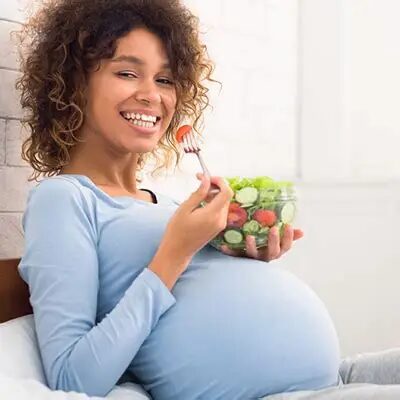
Pregnancy has made me think about food differently.
As someone expecting a baby, nutrition suddenly feels much more personal. I’m not only thinking about what sounds good or what will get me through the day. I’m thinking about what my body needs while doing the incredible work of growing another person.
And as a Black woman, I can’t separate that experience from the larger conversation around Black maternal health.
The goal isn’t perfection. Pregnancy already comes with enough pressure. For me, it’s about understanding what matters, nourishing myself the best way I can, and remembering that our cultural foods can absolutely have a place in a healthy pregnancy.
What the Research Tells Us
A study of 195 Black women examined dietary intake during the second and third trimesters of pregnancy. Researchers found that although many women met minimum carbohydrate and protein requirements, intake of calories, fiber, and several important micronutrients was often inadequate. More than 80% regularly took prenatal vitamins, yet nutrient gaps remained.¹
That stood out to me because it reinforces something important: a prenatal vitamin supports a nourishing diet, but it cannot replace one.
Maternal nutrition matters because inadequate nutrient intake during pregnancy has been associated with maternal anemia, low birth weight, preterm birth, neural tube defects, and other birth defects.¹
But pregnancy nutrition doesn’t have to become another overwhelming list of rules.
Instead of “Eating for Two,” Think “Nourishing Two”
We’ve all heard the phrase eating for two, but pregnancy isn’t about doubling the amount of food you eat. What matters is getting enough nourishment from the foods you choose.
Some nutrients deserve extra attention during pregnancy, including protein, fiber, folate, iron, calcium, and vitamin D.² Folic acid is particularly important before conception and during early pregnancy because it helps reduce the risk of neural tube defects.²
Rather than obsessing over every meal, I find it more helpful to think about what I can add.
Can I add beans or eggs for protein? Greens to dinner? Pair fruit with yogurt, nuts, or peanut butter? Include more whole grains or iron-rich foods?
Those small additions add up.
Our Cultural Foods Belong Here Too
This may be the part of pregnancy nutrition that matters most to me.
Healthy eating should not require us to leave our culture at the door.
Collard greens, black-eyed peas, beans, sweet potatoes, okra, cabbage, low-mercury fish, eggs, whole grains, fruits, nuts, and seeds are examples of familiar foods that can provide valuable nutrients during pregnancy.
Research on Black women during pregnancy also emphasizes nutrition guidance that considers cost, access, and culturally appropriate foods, rather than giving everyone the same generic recommendations.¹
Instead of asking, “What cultural foods do I need to give up?” I think a better question is:
How can I use the foods I already know and love to nourish myself even more?
Pregnancy Nutrition Doesn’t Have to Be Perfect
This is something I’m learning in real time.
Some days I put together beautifully balanced meals. Other days, pregnancy symptoms, fatigue, cravings, or simply life have different plans.
And that’s okay.
The bigger picture matters more than any single meal. Am I regularly including foods that nourish me? Taking my prenatal vitamin as recommended? Staying hydrated? Asking questions when I need help?
Pregnancy has reminded me that nutrition isn’t only about nutrients. It’s also about caring for the person who needs those nutrients.
Black Mothers Deserve Nutrition Care That Listens
Black women deserve prenatal nutrition support that recognizes the whole person—not simply numbers on a chart.
That means considering culture, family traditions, finances, food access, pregnancy symptoms, and personal preferences. Research supports nutrition counseling during pregnancy that helps women identify nutritious, affordable, and culturally appropriate foods.¹
My interest in Black maternal health started before pregnancy became personal, but expecting a baby has allowed me to understand this work from a new perspective.
I’m learning alongside other expecting mothers: trying to nourish my baby, nourish myself, and give myself grace in the process.
Because we don’t have to choose between our health and our culture.
There is room for both at the table.
Reference
- Myles M, Gennaro S, Dubois N, O’Connor C, Roberts K. Nutrition of Black Women During Pregnancy. Journal of Obstetric, Gynecologic & Neonatal Nursing2017;46(3):e83-e94. doi:10.1016/j.jogn.2017.01.007
- Procter SB, Campbell CG. Position of the Academy of Nutrition and Dietetics: Nutrition and Lifestyle for a Healthy Pregnancy Outcome. Journal of the Academy of Nutrition and Dietetics2014;114(7):1099-1103. doi:10.1016/j.jand.2014.05.005
This article is for educational purposes and is not a substitute for individualized medical or nutrition advice. Talk with your prenatal healthcare provider or registered dietitian nutritionist about your individual pregnancy needs.
Leave a Reply


